


Swiss Re Corporate Solutions to acquire QBE's Global Trade Credit and Surety business
Article information and share options
Zurich/Sydney, 20 February 2026 – Swiss Re Corporate Solutions, the commercial insurance arm of the Swiss Re Group, has agreed to acquire the Global Trade Credit and Surety business of QBE Insurance Group (QBE), subject to regulatory approvals.
Upon successful completion, the acquisition will strengthen Swiss Re Corporate Solutions' primary credit and surety insurance offering and expand its capabilities to address the risk management needs of corporate clients. The transaction supports Swiss Re Corporate Solutions' strategic ambition to diversify its portfolio and capture new growth opportunities.
QBE's Global Trade Credit and Surety business operates through a highly experienced team with a strong presence in Australia, New Zealand and the UK. The portfolio is expected to generate annual revenues of approximately USD 200 million.
This specialty insurance line plays a critical role in helping companies manage payment and performance risk arising from their accounts receivable. Globally, this segment of the insurance market generates around USD 19 billion in premium annually, with continued growth potential driven by heightened economic uncertainty, more complex supply chains and rising demand for sophisticated risk transfer solutions.
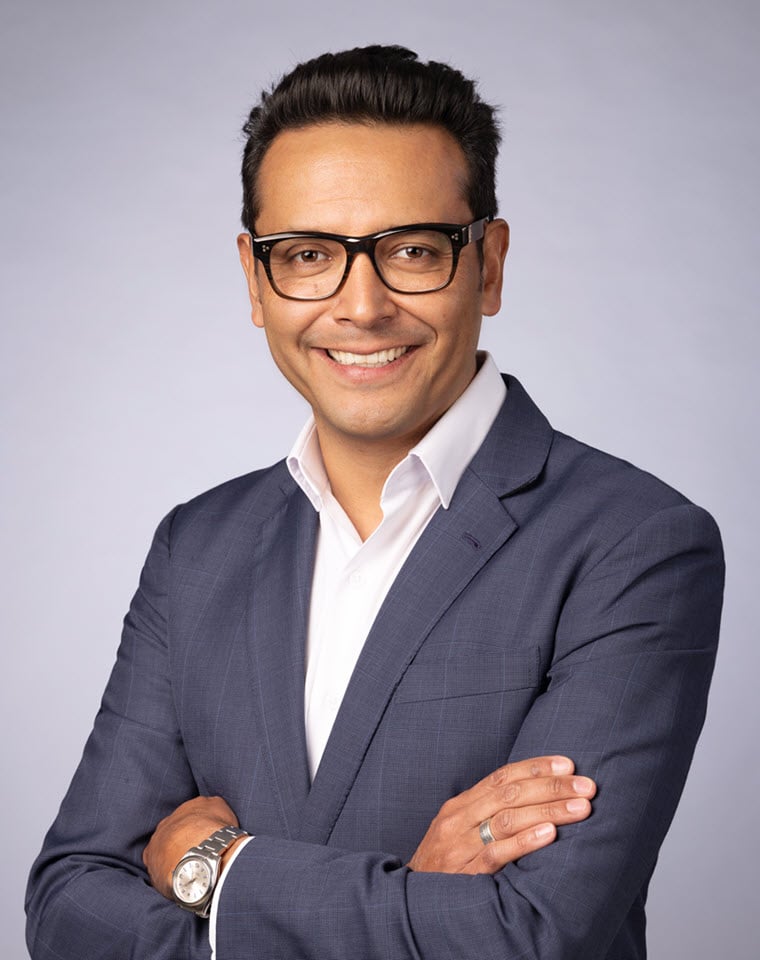
Ivan Gonzalez, CEO of Swiss Re Corporate Solutions, said: "This acquisition marks an important milestone for Swiss Re Corporate Solutions. It allows us to expand our offering in this attractive segment by strengthening our global credit and surety platform with a well-managed, profitable portfolio and a highly experienced team. We are excited to build on QBE's market-leading capabilities as we continue to differentiate our offering to help corporate clients navigate the evolving risk landscape."
The transaction is subject to various closing conditions including regulatory approvals, which are likely to take several months. During this phase, Swiss Re Corporate Solutions looks forward to working closely with QBE to ensure continuity for policyholders, brokers, and the team members, who are a key part of this transaction. No financial details of the transaction are being disclosed.
Katie McGrath
For more information, see QBE's media release: Newsroom | QBE Insurance Group
Further Information
Downloads
- Press release in English (pdf)
- Press release in German ( pdf)
- Image of Ivan Gonzalez (jpg)
About Swiss Re Corporate Solutions
Swiss Re Corporate Solutions provides risk transfer solutions to large and mid-sized corporations around the world. Its innovative, highly customised products and standard insurance covers help to make businesses more resilient, while its industry-leading claims service provides additional peace of mind. Swiss Re Corporate Solutions serves clients from offices worldwide and is backed by the financial strength of the Swiss Re Group. Visit ourwebsite or follow us on LinkedIn.
About QBE Insurance Group
QBE Insurance Group Limited (QBE) was founded in Townsville, Queensland in 1886 and is headquartered in Sydney, Australia and listed on the Australian Securities Exchange (ASX). QBE is an international insurer and reinsurer organised across three divisions with a local presence in 26 countries.
Cautionary note on forward-looking statements
Certain statements contained herein are forward-looking. These statements (including as to plans, objectives, targets, and trends) and illustrations provide current expectations of future events based on certain assumptions and include any statement that does not directly relate to a historical fact or current fact.
Forward-looking statements typically are identified by words or phrases such as “anticipate”, “target”, “aim”, “assume”, “believe”, “continue”, “estimate”, “expect”, “foresee”, “intend” and similar expressions, or by future or conditional verbs such as “will”, “may”, “should”, “would” and “could”. These forward-looking statements involve known and unknown risks, uncertainties and other factors, which may cause Swiss Re’s (the “Group”) actual results of operations, financial condition, solvency ratios, capital or liquidity positions or prospects to be materially different from any expected or assumed results of operations, financial condition, solvency ratios, capital or liquidity positions or prospects expressed or implied by such statements or cause the Group to not achieve its published targets. Such factors include, among others:
- macro-economic events or developments including the risk of a global economic downturn, deglobalisation, fragmentation of markets, changes in inflation rates, increased volatility of, and/or disruption in, global capital, credit, foreign exchange and other markets and their impact on the respective prices, interest and exchange rates and other benchmarks of such markets;
- elevated geopolitical risks or tensions, including global political or domestic instability, which may consist of conflicts arising in and between, or otherwise impacting, countries that are operationally and/or financially material to the Group or significant elections that may result in domestic and/or regional political tensions as well as contributing to or causing macro-economic events or developments as described above;
- the frequency, severity and development of, and losses associated with, insured claim events, particularly natural catastrophes, human-made disasters, pandemics, liability excess inflation, acts of terrorism or acts of war, including developments or escalation of ongoing conflicts or wars and any associated governmental and other measures such as sanctions, expropriations and seizures of assets as well as the economic consequences of the foregoing;
- the Group’s ability to adhere to standards related to the environment, climate change, social issues, employment (such as inclusion), respect for human rights, and governance. These are often referred to by expressions such as sustainability, environmental, social and governance ("ESG"), and corporate social responsibility (“CSR”). The Group's ability to fully achieve goals, targets, ambitions or stakeholder expectations related to CSR, ESG and/or sustainability matters and ability to adapt to the evolving expectations of investors, shareholders, business partners, or third parties, including regulators and public authorities, as well as CSR, ESG and/or sustainability recommendations, standards, norms, metrics or regulatory requirements;
- the Group’s ability to achieve its strategic objectives;
- legal actions or regulatory investigations or actions, the intensity and frequency of which may increase;
- the Group’s dependence on third parties, including reinsurers, external investment managers, and other service providers;
- the Group’s ability to attract, retain and train highly skilled and technically qualified employees at the senior management level as well as in key operational roles;
- the effects of business disruption due to terrorist attacks, cyberattacks, natural catastrophes, public health emergencies, hostilities or other events;
- central bank, regulatory or governmental intervention in the financial markets, trade wars or other tariffs and protectionist measures relating to international trade and cross-border service arrangements, adverse geopolitical events, domestic political upheavals or other developments that adversely impact global economic conditions;
- mortality, morbidity and longevity experience;
- the Group’s ability to maintain sufficient liquidity and access to capital markets, including sufficient liquidity to cover potential recapture of reinsurance agreements, early calls of debt or debt-like arrangements and collateral calls due to actual or perceived deterioration of the Group’s financial strength or otherwise;
- the Group’s ability to realise amounts on sales of securities on the Group’s balance sheet equivalent to their values recorded for accounting purposes;
- the Group’s ability to generate sufficient investment income from its investment portfolio;
- changes in legislation and regulation or the interpretations thereof by regulators and courts, affecting the Group or its ceding companies or the markets in which they are operating;
- matters negatively affecting the reputation of the Group, its board of directors or its management;
- the lowering, loss, giving up of, or the decision not to participate in one of the financial strength or other ratings of one or more companies in the Group, and developments adversely affecting its ability to achieve improved ratings;
- uncertainties in estimating reserves, including differences between actual claims experience and underwriting and reserving assumptions;
- changes in our policy renewal and lapse rates and their impact on the Group’s business;
- developments, litigation, or regulatory changes relating to the use of artificial intelligence (“AI”) by the Group or third-party vendors, including risks around data quality, explainability, fairness, privacy, cybersecurity, intellectual property, overstating AI capabilities, reliability and effectiveness of AI systems, data or third-party dependency, failings in human oversight or expertise, adoption or integration, and the Group’s ability to implement and govern AI responsibly and in line with evolving legal, ethical and technological standards;
- the outcome of tax audits, the ability to realise tax loss carryforwards and deferred tax assets (including by reason of the mix of earnings in a jurisdiction or deemed change of control), which could negatively impact future earnings, and the overall impact of changes in tax regimes on the Group’s business model;
- changes in accounting estimates or assumptions that affect reported amounts of assets, liabilities, revenues or expenses, including contingent assets and liabilities as well as changes in accounting standards, practices or policies, including the Group’s recent adoption of IFRS;
- failure of the Group’s hedging arrangements to be effective;
- significant investments, acquisitions or dispositions, and any delays, unforeseen liabilities or other costs, lower-than expected benefits, impairments, ratings action or other issues experienced in connection with any such transactions;
- extraordinary events affecting the Group’s clients and other counterparties, such as bankruptcies, liquidations and other credit-related events;
- changing levels of competition in the markets and geographies in which the Group competes; and
- limitations on the ability of the Group’s subsidiaries to pay dividends or make other distributions.
These factors are not exhaustive. The Group operates in a constantly changing environment and new risks may emerge accordingly. You are cautioned not to place undue reliance on forward-looking statements. The Group undertakes no obligation to publicly revise or update any forward-looking statements, whether as a result of new information, future events or otherwise.
Contact: Get in touch with our experts

Group Media Relations
Contact us if you are a journalist with a media enquiry relating to Swiss Re Group.