


Climate Risk Services
Advance your climate resilience with data, platform services and insights to reinforce your risk management and reporting capabilities.
Report on your physical climate risks and Adapt to climate change
The evaluation of physical climate risks and financial quantification empowers your business to comprehend the impact of climate change on its assets and economic endeavors—both in the present and across near, mid, or long-term horizons. Not only will this inform strategic planning but also respond to regulatory requirements.
Client testimonials
-
Swiss Re has been essential in supporting our climate risk adaptation. Their expertise, innovative solutions, and resilience-building efforts help us address climate change challenges. Their insights and collaboration enhance our risk mitigation and community protection. We appreciate Swiss Re’s commitment to a sustainable and secure future.

-
We had an excellent working relationship with the Swiss Re team, who were able to adapt to our requirements in a highly professional manner to deliver reports on the challenges our company may face and a vision of where our future risks will potentially lie. These reports enable us to better anticipate potential risks and take action in the future. The Swiss Re team listens and is highly educational, covering the full range of climate issues.

-
The Climate Risk Portfolio Assessment for our risk vulnerability analysis was carried out very professionally. We gained interesting insights into our climate risks and also valuable insights for the definition of measures for different locations. All in all, a very professional handling, valuable and efficient support on this topic and a great, courteous team.

-
Holcim Climate Report 2022: As part of Holcim’s scenario analysis, acute and chronic physical climate-related risks have been assessed by Holcim throughout its 62 sites in 31 countries. When conducting this study Holcim aimed to quantify the potential financial impact of climate hazards at a site level and along supply chains. The study has been carried out based on physical climate risk insights provided by the Swiss Re RDS Sustainability Compass tool.

-
Elaborating the climate risks for EU-Taxonomy requirements with Swiss Re was simple and straightforward. Swiss Re responded to our needs and impressed us with its expertise, flexibility and excellent communication.

Get in touch Want to advance your climate resilience?

Annemarie Büttner
Know your current risks and Look into the future prepared for climate change
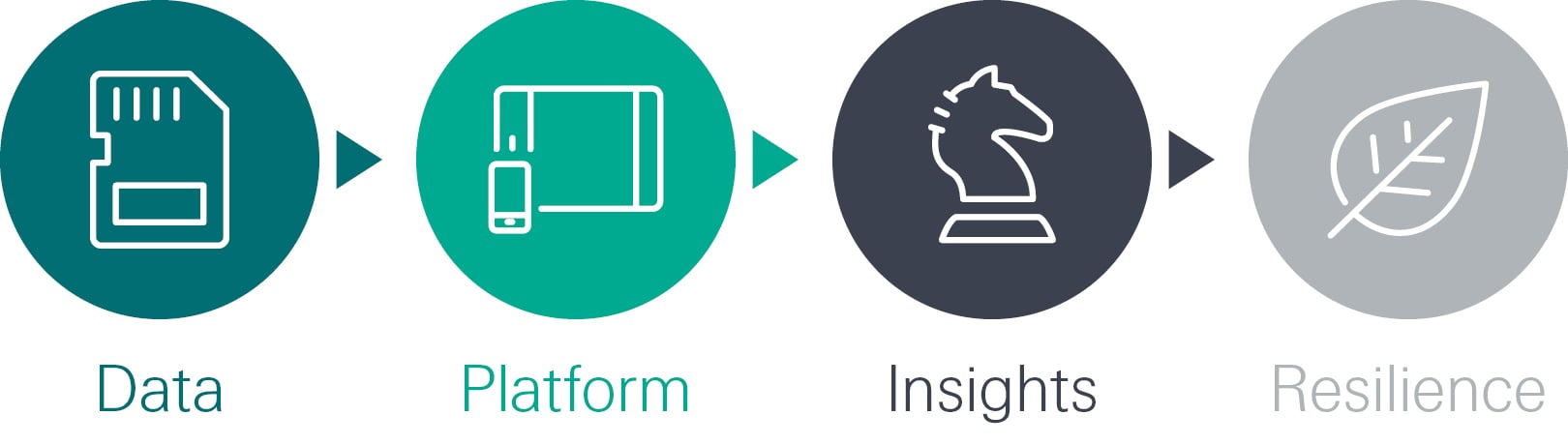
To comprehend your existing risk profile and anticipate the future, equipped to address the challenges posed by climate change, Swiss Re offers a holistic service. In-house developed climate risk evolution datasets (Climate Risk Data), an interactive online platform (Sustainability Compass), and insights (Climate Risk Insights) translate your data into actionable risk mitigation measures.
Climate risk solutions steps
Climate Risk Data
Swiss Re provides comprehensive insights into weather, climate-related risks, and Nature & Biodiversity risks. To support this, we offer data products such as Climate Risk Scores, integrated hazard views, and underlying variables derived from sources like reanalysis datasets and climate models. These datasets enable hazard assessments in 5-year intervals from 2030 through the end of the century, across four IPCC scenarios: SSP1-2.6 (Sustainability), SSP2-4.5 (Middle of the road), SSP3-7.0 (Regional rivalry), and SSP5-8.5 (Fossil-fueled development). Our data products help clients to inform regulatory requirements and plan effective risk mitigation strategies.
Water-related climate risks
Fluvial Floods (Riverine Floods) occur when rivers or other water bodies overflow their banks. They are among the most loss-driving natural hazards, capable of disrupting transportation and critical infrastructure, damaging buildings and production facilities, and halting operations in affected areas.
Pluvial Floods (Flash Floods) result from extreme precipitation, causing surface water accumulation. These floods pose severe risks to ecosystems, production processes, and critical infrastructure, often leading to significant business interruptions even at sites that are not in proximity of a water body.
Storm Surge (Coastal Flooding) occur when windstorms push seawater inland, causing coastal inundation. Even without changes in windstorm severity or frequency, rising sea levels amplify these impacts over time. Storm surges can damage coastal infrastructure and buildings and disrupt supply chains.
Extreme Precipitation can trigger flooding in areas outside mapped flood zones, potentially damaging infrastructure and agriculture while disrupting transportation and logistics networks.
Glacial Lake Outburst Floods (GLOF) involve the sudden release of water from a glacial lake or water stored within, under, or on a glacier. These events can devastate transport routes, buildings, and tourism infrastructure in mountainous regions.
Temperature-related climate risks
Wildfires reflect changes in fire susceptibility within a region, influenced by its intrinsic characteristics. Forward-looking indicators include shifts in the Fire Weather Index, which serves as a proxy for evolving wildfire conditions. Wildfires can disrupt transportation and critical infrastructure, damage buildings and production processes, and halt operations in affected areas.
Droughts represent prolonged periods of water scarcity, severely impacting agriculture, forestry, and industries reliant on water for cooling or transport.
Heat waves defined as abnormally hot weather lasting at least three days can reduce worker productivity, damage materials and infrastructure, and increase cooling costs. Heat stress, characterized by high temperature and humidity, threatens outdoor labor safety, elevates health risks, and may require operational adjustments.
Cold stress occurs when temperatures drop below 0°C, with cold spells damaging crops, affecting production processes, degrading roads, and driving up heating costs.
Permafrost thawing, the gradual loss of ground ice, can destabilize terrain and threaten buildings and infrastructure in mountainous or Arctic regions.
Storm-related climate risks
Windstorms are characterized by exceptionally high wind speeds linked to weather phenomena such as tropical cyclones (including hurricanes and typhoons), tornadoes, or extratropical cyclones. These events can disrupt transportation and critical infrastructure, damage buildings and production facilities, and halt operations in affected areas.
Solid mass-related risk
Avalanches refer to a mass of snow, ice, earth, or rocks, or a mixture of these, rushing down a mountainside. Avalanches can endanger tourism and transport infrastructure in mountainous regions and cause significant damage to buildings and critical facilities.
Solifluction describes the slow downhill movement of water-saturated soil in cold regions, leading to soil instability that can compromise building foundations and disrupt transport routes.
Nature-related risk
Water stress refers to the ratio of total water demand to available renewable surface and groundwater supplies. High water stress occurs when demand nears or exceeds sustainable supply, which can increase costs, disrupt industrial operations, and heighten competition among agricultural, industrial, and domestic users. In severely stressed regions, shortages can hinder economic growth, disrupt production, and place additional pressure on infrastructure needed to store, treat, and distribute water.
Water quality (based on 9 input layers) refers to the chemical, physical, and biological characteristics of water that determine its suitability for human, agricultural, and industrial use. Poor water quality can disrupt industrial processes, damage equipment, increase treatment costs, and strain infrastructure, limiting reliable access to safe water for businesses and communities.
Air quality refers to the concentration of pollutants in the atmosphere, including particulate matter, nitrogen oxides, and carbon monoxide. Poor air quality can harm human health, degrade ecosystems, and disrupt industrial operations. In heavily polluted regions, it can reduce workforce productivity, damage machinery, disrupt supply chains, raise compliance costs, and increase pressure on industries to adopt emission controls and filtration systems.
Habitat intactness measures the proportion of remaining natural biodiversity. It is important for industries like forestry, agriculture, and tourism, as habitat loss can reduce resources, disrupt supply chains, and increase operational costs. Declining intactness can also lead to stricter regulations, higher restoration expenses, and reputational risks for businesses.
Additional information on other variables is available through our Risk Data & Services platform.
Risk Insights Services
Climate Risk Specialists support you in making your insights actionable by accessing the vast knowledge of Swiss Re's Risk Engineering Services. We support you on your journey from an overview of your risk profile, to deep-dives into single assets and into actionable adaptation planning.
Why Swiss Re Climate Risk Services
Swiss Re view of risk
We share our risk views used in our core business and additionally develop scientifically sound climate risk data such as our Climate Risk Scores.
Technology for risk assessments
Our Risk Data & Services (RDS) solution is a location-based risk intelligence GRC SaaS platform that turns customers site-specific data into digital twins, enabling customer’s contextual decision-making with curated risk insights.
Climate risk specialists with applied commercial knowledge
Our specialists tailor Swiss Re’s insights of climate models to our customers requirements boost resilience.
Aligned incentives through «skin in the game»
We have a vested interest in making our customers more resilient and supporting them in managing the impacts of climate change proactively.
Risk engineers for actionable insights
Swiss Re’s risk engineers support the translation of climate risk insights into actionable risk mitigation measures.
The services described may not be available in all jurisdictions, availability of which shall be in Swiss Re Corporate Solutions' sole discretion and/or as restricted by applicable law.